


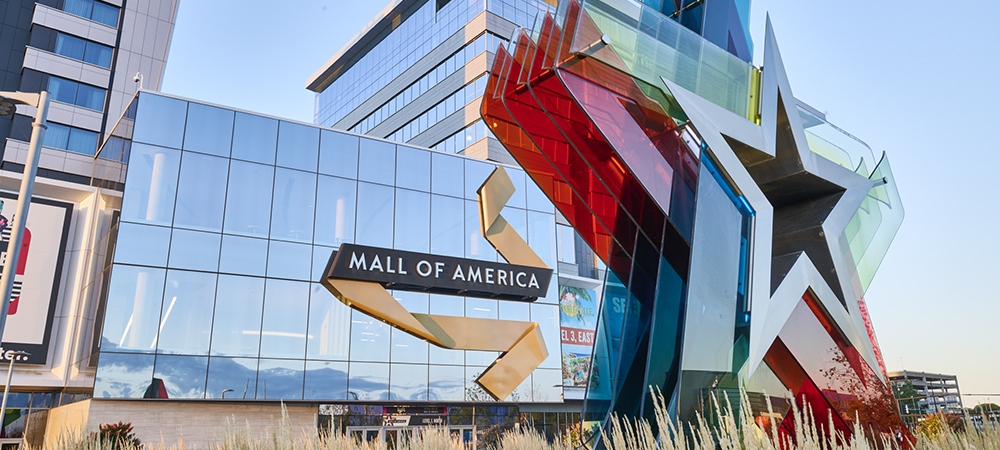
Advanced car counting and surveillance solutions from Axis Communications boost operational efficiency across one of North America’s largest tourist destinations.
Mall of America, the largest shopping and entertainment complex in North America, announced an expansion of its on-going partnership with Axis Communications to deploy cutting-edge car counting video analytics across more than a dozen locations.
With this expansion, Mall of America (MOA) has boosted operational efficiency, improved safety and security and enabled more informed decision-making around employee scheduling and streamlining transportation for large events.
Standing at 5.6 million square feet and home to more than 500 retailers, restaurants and more, MOA hosts over 300 events each year and attracts more than 32 million visitors annually from around the world. Scheduling those events—from concerts to massive outdoor food festivals—requires careful planning to support parking operations and ensure safety and security for attendees.
By expanding its surveillance system and investing in AI-enabled video analytics with Axis Communications, the Mall met its need for a reliable, accurate and scalable solution to support its 24/7 safety and security operations.

“We needed technology that could keep pace with our evolving needs and make sure our security team could focus on the highest-priority tasks,” said Aaron Nielsen, Vice President of Information Technology at MOA. “Our previous solution struggled with the unpredictable Midwestern weather—including snow, rain and cold—all impacting accuracy and reliability. Car counting is one of the most important operational metrics we have. Implementing a system that delivers accurate data allows us to quickly scale from one location to more than a dozen additional locations throughout the Mall, providing efficiency and invaluable information for our team.”
The success of the initial test led MOA to rapidly expand the implementation to over a dozen locations. The car counting data now drives macro-level decisions about Mall hours and event planning, as well as micro-level scheduling for vendors and staff—empowering operational agility across the organization.
With this state-of-the-art expansion, MOA can:
- Deploy solutions anywhere: A trial began with an Axis camera deployed in a particularly challenging location—on a light pole isolated from the building. Despite limited access to power and data, the trial system proved over 99% accurate. After minor adjustments, performance improved even further.
- Drive decisions with analytics: By deploying AI-enabled line-crossing analytics at the edge, MOA benefits from a rugged, scalable and cost-effective approach to decision-making, powered by the business intelligence these devices gather. This is especially valuable in areas where the Mall entrance meets busy intersections, as the line-crossing technology can precisely differentiate between a car entering the Mall and one merely passing by.
- Create a smarter security strategy: Beyond parking intelligence, Axis’ technology supports the Mall’s broader security strategy. Cameras and Axis network speakers installed in restricted areas detect and deter unauthorized access in real time, with alerts immediately sent to the Mall’s central dispatch center.
- Prioritize employee safety: With unpredictable Minnesota winters, keeping employees and customers safe was key to this deployment. With the new system, adjustments are intuitive—tasks that once required ladders, lifts and multiple people can now be done from a desktop. Non-technical team members can review audits, make changes and immediately analyze results from a safe location.
“Mall of America presented us with a challenge that required not just technology, but collaboration, trust and innovation,” said James Stark, Segment Development Manager, Retail at Axis Communications. “We’re honored to be part of their forward-looking approach to safety and operational intelligence. As Mall of America continues to lead the way in experiential retail and entertainment, we remain committed to delivering the reliability, flexibility and insight-driven technology that their dynamic environment demands.”
Looking ahead, MOA is exploring additional possibilities as it aligns resources for future phases of the project. From advanced capabilities like people counting and license plate recognition to using line analytics to better understand visitor trends—such as distinguishing hotel guests from shopping center visitors—the potential for smarter, more efficient operations continues to grow.
We asked Aaron Nielsen, Vice President, Information Technology, Mall of America, further questions to find out more about the project.
What prompted you to expand the car counting analytics solution across multiple Mall of America locations?
We made the decision to scale this technology based on the great success of our pilot deployment. It delivered actionable, real-time data that gave us a clearer lens into our traffic flow. The immediate impact on operational visibility and decision-making made a compelling case for expansion across multiple ingress points. This wasn’t just about counting cars, it was about unlocking a new layer of situational intelligence for our teams.
How has AI-enabled video analytics improved operational planning for major events and daily traffic flow?
What once relied on instinct and anecdotal trends is now grounded in real-time, AI-driven data. With intelligent video monitoring, we’re able to proactively manage guest flow and resource allocation for both major events and daily traffic. It’s shifted us from reactive to predictive, allowing for smarter staffing models and optimized parking strategies, which has resulted in an enhanced guest experience.
What were the biggest limitations of your previous system, and how did the Axis solution overcome them—especially in extreme weather?
Our previous system struggled with reliability and accuracy, especially under the strain of Minnesota winters. Snow, ice, and cold weather routinely disrupted sensor performance. The new AI-powered infrastructure is purpose-built for resiliency. The hardened hardware and advanced analytics ensure high fidelity data regardless of external conditions. That means uninterrupted insight, even in a blizzard.
Can you explain how car counting data now informs both high-level decisions and daily scheduling across the Mall?
This isn’t just a tech upgrade, it’s a foundational data stream integrated into our broader analytics ecosystem. We now have live dashboards and trend analysis tools informing everything from long-term infrastructure planning to hourly scheduling adjustments. We’re using it to refine staffing, optimize traffic control, and inform marketing strategies based on actual guest patterns, bridging the gap between digital intelligence and physical operations.
How has this technology impacted employee safety and efficiency, especially during harsh winter months?
Removing the need for manual vehicle checks is a significant win for safety. Our teams can focus on higher-value tasks rather than exposure to extreme conditions. Additionally, we’re using the data to improve snow removal prioritization and emergency planning, ensuring our workforce stays safe while the guest experience remains seamless.
Looking ahead, what emerging capabilities—like license plate recognition or people counting—are you most excited to explore in future phases?
We’re just scratching the surface. Capabilities like license plate recognition and advanced pedestrian counting are in the pipeline. These tools will give us deeper insight into dwell times, repeat visits and crowd dynamics, enabling us to create more personalized and responsive experiences. As we continue to evolve, AI becomes not just a technology tool, but a strategic enabler of next-generation guest engagement.

