


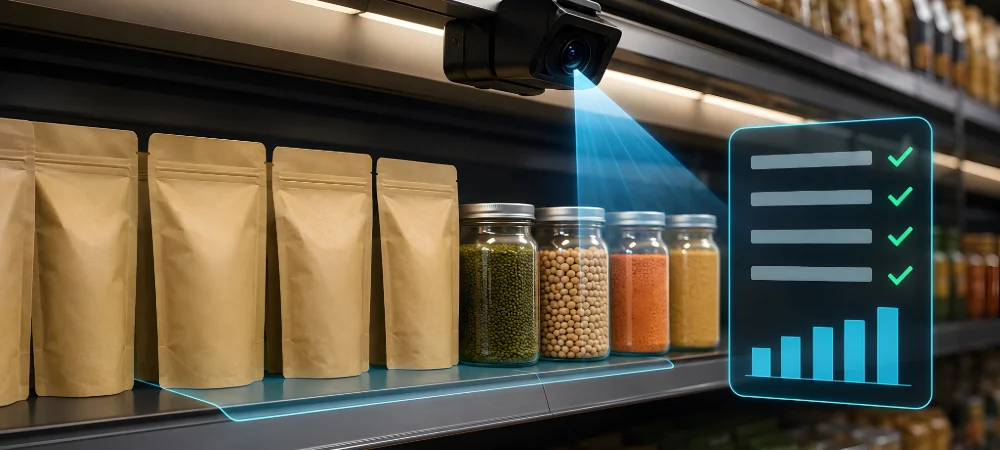
Renaud Pacull, CEO and Founder of EasyPicky, examines how AI-powered shelf monitoring can help retailers and brands turn in-store data into faster action, improve execution and protect the return on existing investments.

Retailers are investing heavily in getting shoppers through the door. Promotions, product launches, merchandising strategies and sales activity are all designed to turn attention into purchases. But even the strongest strategy can fall short if what a shopper encounters in store doesn’t match what was planned.
A product not available on the shelf ultimately can’t be purchased and poor product placement or visibility can make it harder for shoppers to find what they are looking for. When in-store execution fails to reflect the intended merchandising strategy, the investment made elsewhere in the customer journey risks losing its impact at the point where it matters most: the shelf.
These issues can be difficult to spot across large store networks, yet their cumulative commercial impact can be significant. This is what makes retail execution more than an operational concern. For retailers and brands looking to maximise the return on their existing investments, understanding what is happening in stores is an increasingly important part of protecting sales.
Small execution gaps can create a much bigger problem
Store execution depends on field sales and merchandising teams ensuring that products are available, correctly positioned and visible. Store visits therefore play an important role in understanding shelf availability, checking merchandising plans and monitoring what is happening in a competitive environment.
A key challenge is that many businesses still rely on manual processes, subjective assessments and delayed reporting to carry out these checks – this can leave field data incomplete or inconsistent and make it more difficult to use when decisions need to be made.
The commercial risk is easy to underestimate because an individual execution issue might appear relatively minor. A stock problem in one store or an incorrectly placed product can look like an isolated operational problem. But across multiple products, stores, regions and field visits, these gaps can add up.
More importantly, the cost is not limited to the execution issue itself. Time and investment have already gone into driving demand and securing the right in-store presence. If that investment is not reflected accurately on the shelf, retailers and brands risk losing the opportunity to convert it into sales. Improving execution therefore starts with closing the gap between what has been planned and what is really happening in store.
You cannot fix what you cannot see
And visibility is central to that challenge – retail teams need accurate information about conditions on the ground if they are going to identify problems early and make effective decisions. Traditional store audits can make that difficult, and manual data collection takes time and can introduce errors – meaning that insights only become available after the opportunity to act has passed. By then, an out-of-stock product or visibility issue may already have affected performance.
A more effective approach is to turn store visits into a source of consistent, actionable data. Tracking indicators such as product availability, share of shelf and competitor presence can give businesses a clearer understanding of retail performance. Looking at that information across individual stores, chains, regions and territories can also help teams identify where execution differs and adapt their approach accordingly.
Crucially, better visibility can also create stronger alignment between field teams and headquarters. Rather than relying on assumptions or outdated information, teams can build merchandising decisions around real in-store conditions and a shared view of what is happening on the shelf. That shifts retail execution from simply recording problems to identifying where action is needed and giving teams an opportunity to respond.
Turning shelf data into action with AI
This is where AI and computer vision can change the value of a store visit. Instead of requiring field teams to manually count products or record shelf conditions, video recognition can capture and analyse what is happening on the shelf and turn it into usable data.
The real opportunity lies in shortening the distance between identifying a problem and taking action. Technology can analyse shelf conditions during a store visit, helping teams spot issues such as out-of-stocks, incorrect shelf placement or poor product visibility while there is still an opportunity to address them. Rather than waiting for information to filter through delayed reporting, field teams can use these insights to make more informed decisions in store.
The aim is not simply to collect more information. It is to make that information faster, more consistent, and more useful. Automating elements of the store audit can reduce reliance on manual processes while giving field teams more time to focus on higher-value activities, from acting on execution issues to engaging with retailers.
That greater consistency can also support decisions beyond the individual in-store visit. Building a reliable picture of product availability, shelf share and other in-store conditions across stores and regions gives decision-makers a stronger foundation for refining merchandising strategies based on what is actually happening on the ground.
Ultimately, the value of AI-powered shelf monitoring is not the technology itself, but what teams can do with the information it provides. The sooner an execution gap becomes visible, the sooner there is an opportunity to correct it and prevent a seemingly small issue from becoming a larger commercial problem.
Protecting the ROI
When margins and budgets are under pressure, improving commercial performance does not always have to mean increasing investment. There is also value in making sure that existing investments deliver what they were intended to.
Store execution is an important part of that equation – more efficient store visits can allow sales teams to cover more locations, while the ability to act immediately can help address product availability, placement and visibility issues during the visit itself. More accurate data can also strengthen decisions around sales and merchandising strategies.
Over time, that creates a wider opportunity; in-store data can become a strategic asset rather than simply a record of field activity. As execution data builds across teams, stores and regions, businesses can cross-analyse it with sales performance, measure gains and continuously assess the return generated by improvements in execution.
The final metres of the customer journey may not attract the same attention as a major campaign or product launch, but they can determine whether those investments translate into a sale. Retailers and brands therefore need to look closely at what is happening on the shelf, where execution is falling short and how quickly those gaps can be addressed.
The opportunity is not simply to audit stores more efficiently, but to make every store visit more actionable, give teams greater visibility into real in-store conditions and ensure the investment made in attracting shoppers is not quietly lost at the final hurdle.

